
The Kenyon Review, 2026
The Near Abyss. On reading Gethsemane Night by Lev Shestov, in The Kenyon Review (winter 2026). Translation of Presque l’abîme (Revue Esprit, 2023) by Tobias Ryan.
« It was chance that led me back to Pascal and his Pensées.
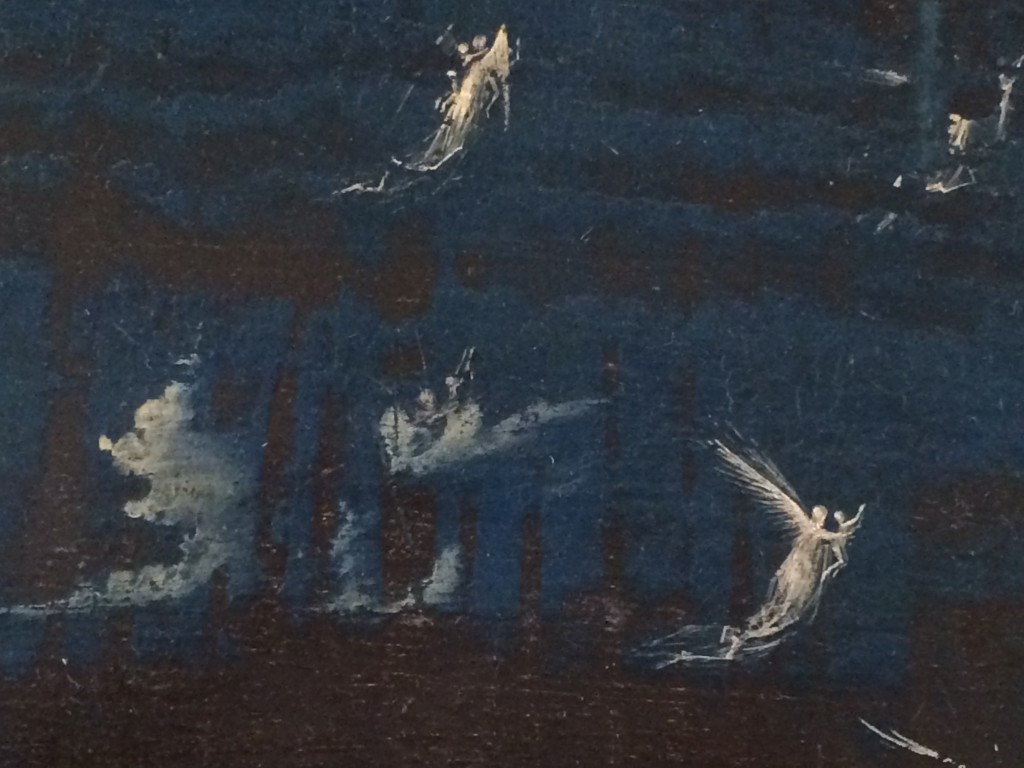
A friend had been hospitalised at Cochin, and, to amuse her during my visit, I suggested we go out for some fresh air. I had completed my studies at that hospital, and years later it was there I had been treated for an aggressive lymphoma; I knew where to head for calm. I led her to what remains of the Abbey of Port-Royal. She didn’t know the place, and we wandered there for an hour or so before I took her back to her room. Having left her, I went back via the cloister which adjoins the chapel and chapterhouse. The building is used for union and administrative offices, a laundrette, and, on the floor overlooking the central garden, the on-call room. Crossing the cloister is a shortcut to get to the RER station, and after every dose of chemo, every scan and every follow-up consultation, I would take that little-known route. As a student, I had often lunched on sandwiches there with friends, there where we could feel like we were outside of the hospital. Not for nothing, however, was my youthful fascination for Port-Royal present in my attachment to those austere surrounds. Not knowing Jansenist doctrine precisely, the literary aura emanating from the place was enough to lightly mask its name and conceal its masochistic intransigence. At the start of my studies, spiritual questions had harried me; I no longer clearly knew in what I believed, and was grappling with contradictions that I had yet to resolve: those of evil, and of that little internal theatre filled with celestial birds, which I sensed was a fanciful production of my mind but was one I cherished. Each day, therefore, the cloister would open a parentheses for thinking about those things with which I was preoccupied: a garden of disquiet amidst the world of modern medicine in which I was being trained.
Those questions though, did they not recur? Without possible response, regardless, they insisted. And then altered over time, and could in turn be formulated: “Does God exist?”, then “Do you believe?”, and then “In what?”; then “God, what is he?” and then “Is this God?” For those who can state “I don’t believe” without a second thought such questions are perhaps pointless, or appear as traces of affective immaturity. Because was it, in fact, a matter of God? And isn’t that word actually not very useful for clarifying existential questions without real answers? I do not know who put me into the world, nor what the world is, nor what I am myself […] All that I know is that I must soon die, but what I know least about is this very death which I cannot evade. Just as I do not know whence I come, so I do not know whither I am going. All I know is that when I leave this world I shall fall for ever into nothingness or into the hands of a wrathful God, but I do not know which of these two states is to be my eternal lot.[1] Inescapable questions, and, in being insoluble, vain. Powerless to have done with them entirely, I believed, in a more or less banal manner, that I had them settled: God was inaccessible, not interfering in human affairs, was not personal, and so, therefore, it was as though he did not exist. We were alone. As for what came after, I would not allow myself to think about it. Neither belief nor unbelief… »
[1] Pensées, Pascal (tr. A.J. Krailsheimer)